PS6: Is Sony Already Preparing the Controller to Replace the DualSense?
Speculation about the future PS6 controller is rampant on social media, with numerous videos, illustrations, and alleged leaks circulating. However, as of now, there are no credible photos of a prototype, no development kit videos, and no industrial technical specifications that reveal the actual controller for the next PlayStation generation.
The widely discussed "leaks" regarding the PS6 controller are primarily based on Sony patents that have been misinterpreted as rumors.
This distinction is crucial. Several technologies recently presented as leaks actually originate from publicly filed Sony documents. While these patents are authentic and offer insights into the research efforts of the manufacturer's teams, they do not confirm that a product utilizing these technologies will eventually reach the market.
One of the most discussed patent applications, bearing the reference US20240269548A1, was filed in February 2023 and published in August 2024, with a US grant expected in January 2026. It describes a controller equipped with surfaces capable of detecting touch, pressure, various gestures, and even the proximity of a finger before it makes contact with the controller.
The main advantage of this system would be the ability to modify the control layout. Theoretically, players could reposition interactive zones, change their functions, or adapt their positions to the size of their hands. The patent specifically mentions touch controls that could replicate different input types, including those of a joystick.
This document is also the source of numerous headlines suggesting a hypothetical PS6 controller without buttons. While this possibility is indeed presented in the patent, it represents only one of the contemplated configurations. Sony also specifies that these surfaces could function with traditional physical buttons.
This nuance significantly alters the interpretation of the document. A controller is typically used without being looked at. The directional pad, analog sticks, buttons, and triggers serve as physical reference points, allowing fingers to immediately find their position.
Eliminating all these controls would necessitate recreating these reference points in another way. However, the patent primarily describes finger detection and the reconfiguration of input zones, not a system capable of mechanically replicating the full tactile sensation of a button. Therefore, a hybrid solution appears much more realistic than a completely smooth surface. But Sony is also exploring another approach to making its controllers customizable.
A much more recent patent, published on July 16, 2026, under the reference US20260199776A1, presents a modular gaming controller. Instead of virtually repositioning controls, this concept would allow for the physical rearrangement of different controller components. The documents specifically mention joysticks, a control pad, a camera, and modules that could have their own graphical interface.
This approach reflects a philosophy already partially present in the PlayStation ecosystem. The DualSense Edge allows for the replacement of certain components and in-depth customization of control configurations. The Access Controller goes even further by enabling users to physically adapt their peripheral to their needs.
Therefore, the modularity of a future controller would not necessarily represent a complete departure from Sony's current products. It could also serve multiple objectives: customization, accessibility, easier replacement of certain parts, or the creation of an ecosystem of optional modules. However, there is no definitive proof that this architecture will be used for the standard PS6 controller.
A highly modular system also comes with constraints: connector durability, element locking mechanisms, calibration, long-term reliability, and, of course, manufacturing costs. Such a solution might therefore be reserved for a high-end controller or specific specialized peripherals.
At this stage, these two patents are particularly interesting because they address the same problem in two different ways. In one case, Sony envisions virtually relocating controls. In the other, it contemplates physically moving them. The desire to allow the controller to better adapt to the player thus appears to be a genuine research avenue. But this is only part of what Sony is preparing.
Next page: Beyond the adaptive triggers and haptic feedback of the DualSense, Sony aims to convey force, weight, rigidity, and even temperature.
Fresh materials — Gaming News

Robert Pattinson's 'The Interview' Anti-Hero: A Star-Making Performance
Robert Pattinson's portrayal of Chris Hansen in The Interview feels almost unnervingly fitting. One might imagine the real Hansen finding a strange satisfaction in being depicted by a Batman actor. Pattinson fully embraces the role, delivering the kind of dramatic close-ups that mid-2

Star Trek: Strange New Worlds Season 4 Episode 8 Review – Orders of Magnitude
Joe Morton delivers an excellent, delightfully unhinged guest turn as Admiral Simon Reeger, a legendary Klingon War-era Starfleet captain who immediately dazzles half the crew and whom anyone watching at home likely realized we couldn't exactly trust. He boards while Captain Pike is of
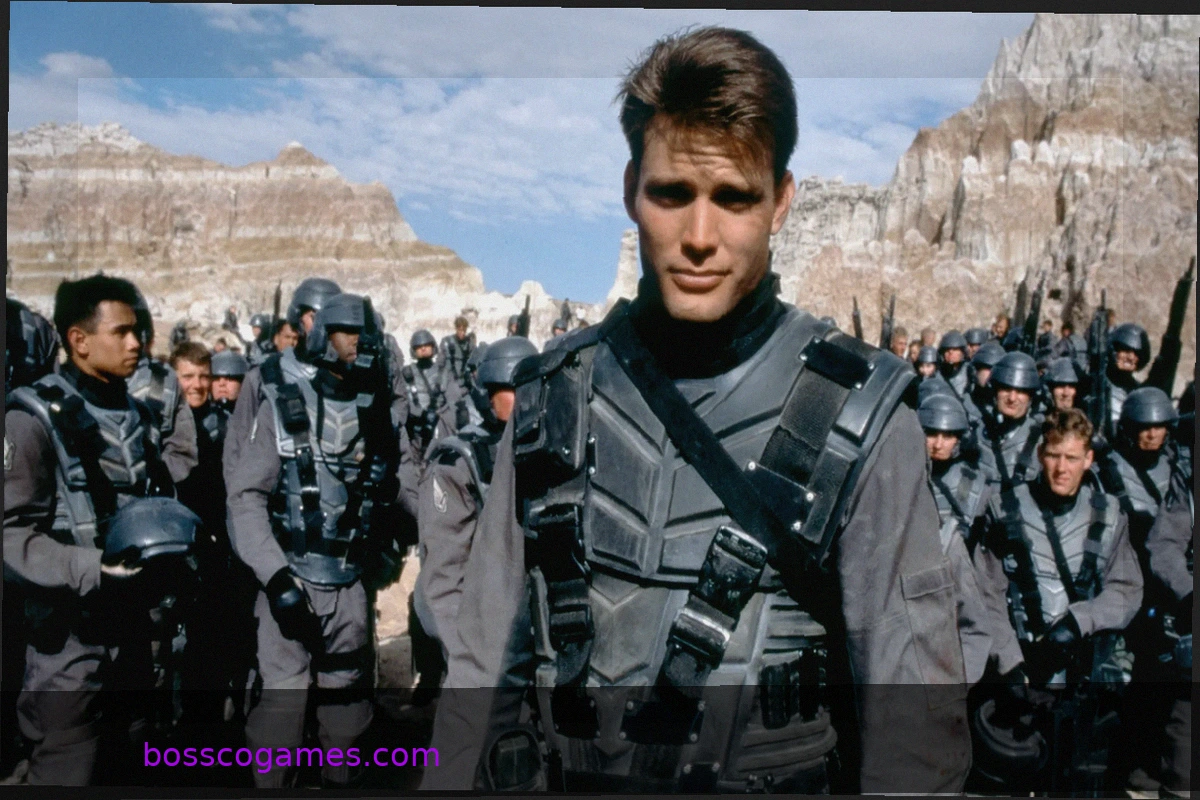
Is the Nazi Metaphor in Starship Troopers Really That Hard to Grasp?
For those unfamiliar with the nuances of the increasingly niche Gen X and millennial pop culture, Starship Troopers was a 1997 film adaptation (and some might argue, an utter betrayal) of Robert A. Heinlein's 1959 science fiction novel of the same name. Directed by Dutch provocateur and cynic Paul
PlayStation Store Lawsuit: Sony Agrees to $7.85 Million Settlement, But Why?
The case dates back to 2019. Until then, retailers like Amazon, Best Buy, GameStop, Target, and Walmart could sell codes for downloading specific games on the PlayStation Store. These resellers were free to offer promotions on these codes, directly competing with Sony Interactive Entertainment

House of the Dragon Season 3 Finale: Steve Toussaint on Corlys' Cunning Politics
If Daemon weren't Daemon, I think that plan would have worked. Rhaenyra remains queen, Daeron becomes Warden of the South, and everyone is happy. Yes, I think you're absolutely right. But the moment Corlys says, "You have to decide what you want: whether you want Rhaenyra on th
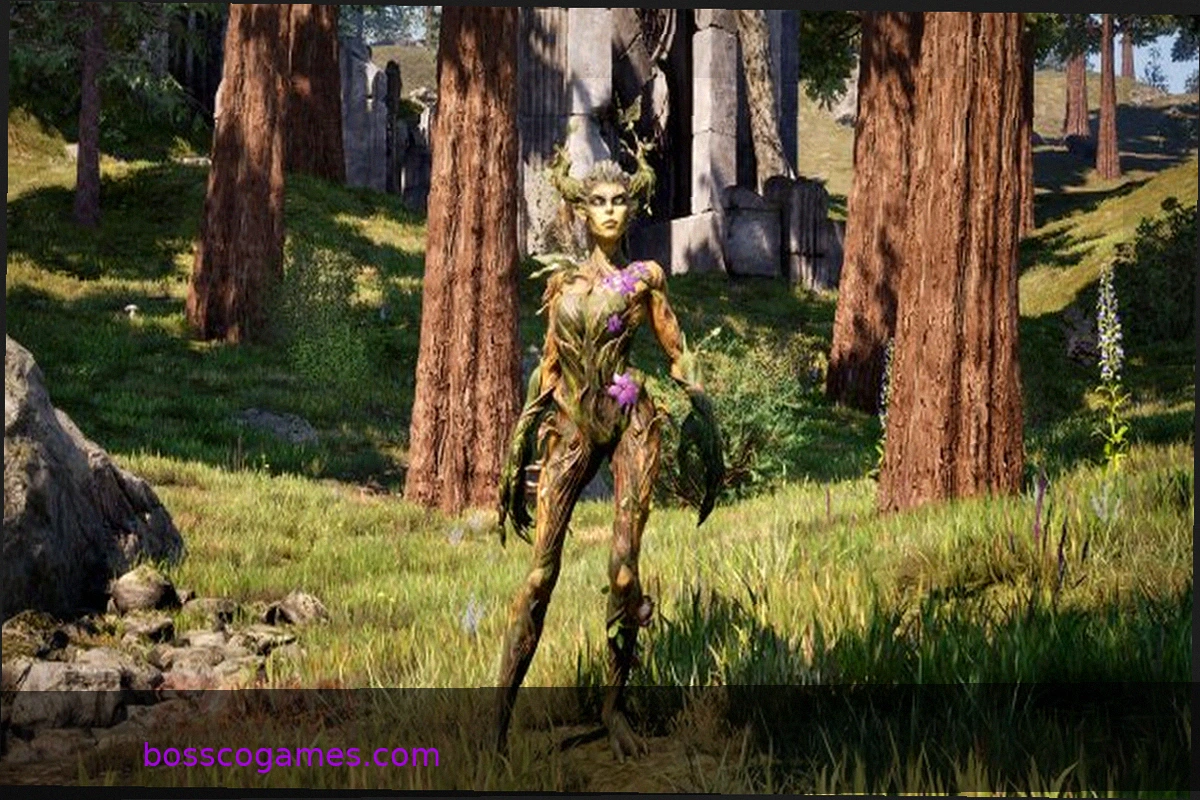
TEST The Elder Scrolls IV: Oblivion Remastered, un classique sur Switch 2, ça vaut quoi ?
Un classique de Bethesda de retour sur Nintendo Initialement publié en 2006, The Elder Scrolls IV: Oblivion demeure l'un des opus les plus chéris de la célèbre franchise de Bethesda. Avec son vaste monde ouvert, ses quêtes secondaires mémorables, ses multiples