

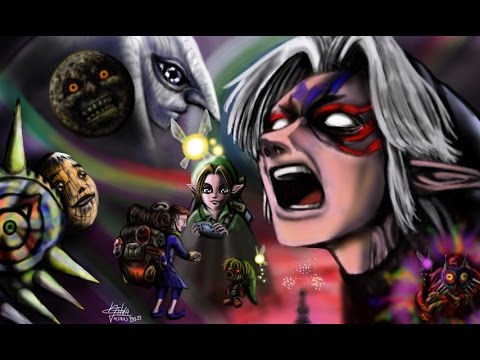
The Legend of Zelda: Majora`s Mask, which recently marked its 25th anniversary on October 26, 2025, stands out for its unique approach to storytelling. This article explores how the game masterfully utilized its unconventional time-travel mechanic to craft deeply memorable and impactful narratives.
In the illustrious history of The Legend of Zelda series, Majora`s Mask often stands as its most polarizing entry. Released for the Nintendo 64 as a direct sequel to the highly praised Ocarina of Time, it inherited many core mechanics and graphical assets. However, it radically differentiated itself by imposing a recurring three-day time loop, a feature that initially divided its audience. Despite this early controversy, this innovative time-loop system ultimately forged Majora`s Mask`s distinct identity, contributing to its lasting emotional impact over two decades later.
While Majora`s Mask is deeply centered on time manipulation, it wasn`t the first Zelda title to introduce this theme. Its predecessor, Ocarina of Time, also featured time prominently through its titular instrument. The Ocarina allowed Link to enter the Temple of Time, claim the Master Sword, and subsequently shift between his innocent childhood and a grim future awaiting Hyrule.
Majora`s Mask, conversely, presents a far more dynamic interpretation of time travel. Link gains significant control over time`s progression, a stark contrast to Ocarina of Time`s fixed jumps between past and future. In Majora`s Mask, Link is trapped in a repeating three-day cycle, desperately trying to prevent the moon from crashing into Termina. If his efforts fail within the 72-hour window, he must rewind time with the Ocarina of Time back to the first day, resetting much of his progress but gaining another opportunity to succeed.
This rigorous time constraint injects a profound sense of urgency into the entire adventure. Failing to complete a dungeon within the three-day limit necessitates rewinding time, which resets not only consumable items but also much of your progress. Completed puzzles, active quests, and character memories all revert. While crucial items and learned insights persist across cycles, players often find themselves effectively restarting large portions of their journey. This mechanic fundamentally reshapes the familiar Zelda gameplay loop, giving Majora`s Mask a distinctive identity within the franchise, setting it apart from its predecessors.
Beyond its influence on gameplay, the time-travel mechanic profoundly impacts the narrative. Nintendo masterfully employed Majora`s Mask`s repeating three-day cycle to weave intimate, character-driven stories that would be impossible to deliver through a conventional linear progression.
Due to the game`s rigid time constraints, every non-playable character (NPC) in Termina adheres to a meticulously scheduled routine. This design choice powerfully conveys the impression that these characters lead their own lives, independent of Link`s presence. For instance, the postman faithfully completes his deliveries, traveling performers practice in the square, and shops operate on specific hours. Observing these daily rhythms provides players with an intimate glimpse into the lives of Clock Town`s inhabitants, fostering a deeper emotional connection.
Crucially, these routines are not static. Link`s timely interactions can alter a character`s path within a given cycle. A notable example involves the elderly woman from the bomb shop, who is scheduled to be robbed on the first night, preventing the availability of a larger bomb bag. By uncovering the details of the crime, Link can intervene, thwarting the thief and securing the item, often earning a valuable mask in return. The player`s method of intervention can also have further repercussions; for example, accidentally detonating the thief might destroy the stolen bomb bag and block a subsequent side quest.
This cyclical nature – repeatedly experiencing the same three days and observing the myriad outcomes for characters – infuses the game`s numerous side quests with profound emotional weight, creating some of the most moving moments in the entire Zelda series. The intricate and emotionally charged quest of Anju and Kafei, a betrothed couple separated before their wedding, is widely celebrated and requires multiple cycles to fully resolve. However, arguably the most poignant narrative unfolds with Cremia and her younger sister Romani, who manage a ranch south of Clock Town.

Though close to Clock Town, access to the ranch is initially blocked by a massive boulder until the third day. Upon its removal and the path`s reopening, Link finds both Cremia and Romani uncharacteristically subdued. Their minimal dialogue hints at an unspecified tragedy that has affected the ranch and its animals.
The specifics of their predicament remain elusive until Link acquires the Goron Mask and the explosive Powder Keg, enabling him to clear the boulder on the first day. This early access reveals two intertwined challenges: Cremia speaks of persistent harassment from a rival ranch, while Romani seeks Link`s help to protect their cows from nocturnal `ghost` attacks. This complex quest unfolds over all three days, demanding skillful intervention to assist both sisters.
Even with successful intervention in Cremia and Romani`s struggles, a profound melancholy pervades the ranch by the third day. As townsfolk prepare to take shelter there, Cremia heartbreakingly admits to Link her acceptance that the ranch, like all of Termina, will be annihilated by the falling moon. Romani, too young to grasp the impending apocalypse, is spared this grim truth. Instead, Cremia offers her a Chateau Romani, a special adult milk drink, for the very first time. On the final night, as they prepare for what they believe is just another bedtime, Cremia assures Link they`ll see him tomorrow, maintaining the heartbreaking facade for her innocent sister.
This scene, particularly after sharing their trials, is deeply moving and perfectly encapsulates why Majora`s Mask continues to captivate players a quarter-century after its debut. While its distinctive time loop initially divided opinions, it ultimately empowered Nintendo to delve into themes and narratives with an emotional depth unattainable through conventional linear storytelling. This makes Majora`s Mask one of Nintendo`s most profoundly resonant and enduring titles.