

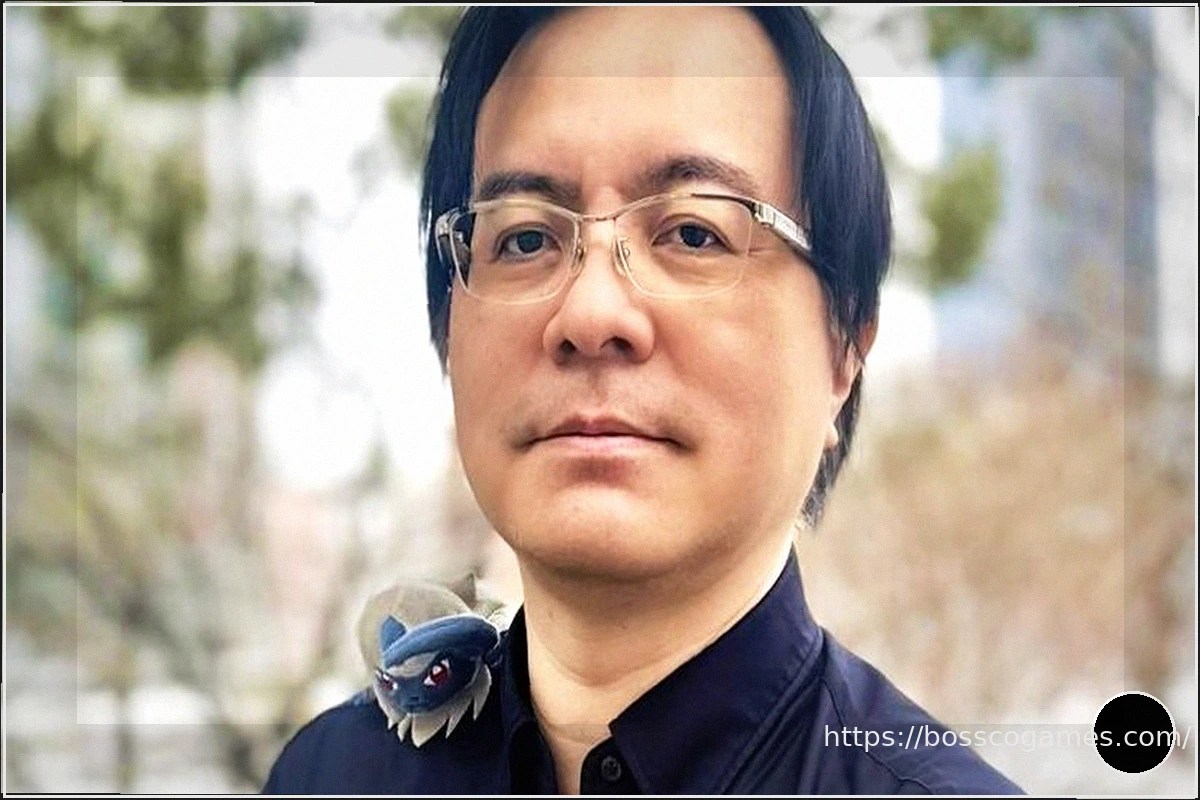
The free-to-start title, arriving April 8 on Nintendo Switch, aims to become the sole platform for official competitive play. Producer Masaaki Hoshino shares the goals, mechanics, and ambitions of a project built to last.
Pokémon Champions, first revealed during Pokémon Day in February 2025 for Nintendo Switch, iOS, and Android, has now solidified its release. The game is officially set to launch on Nintendo Switch on April 8, 2026, with Android, iPhone, and iPad versions following later that year.
This isn’t a traditional Pokémon RPG; instead of exploring regions or earning badges, Pokémon Champions focuses entirely on trainer duels. Players will assemble a team of six Pokémon to battle other players online, making it a dedicated platform for competitive play – an idea long present in the series but never before given such a focused, standalone home. Masaaki Hoshino, a technical director at The Pokémon Company with a background at Bandai Namco and known for producing Pokkén Tournament and Pokémon Unite, leads the project. During the Pokémon European Championships, Hoshino discussed the design choices behind Pokémon Champions, revealing his passion for the battle system since playing Pokémon Yellow.
A Game Built to Last, Not for a Season
Hoshino’s ambition is grand: to establish a permanent home for Pokémon battles, a concept he’s deeply passionate about since the series’ inception. This marks a significant departure from the past. Starting with the 2026 Pokémon World Championships, Pokémon Champions will replace main series titles as the exclusive platform for official VGC and international tournaments. Hoshino emphasized that it won’t be a static game but rather a constantly evolving product, designed to integrate new Pokémon and mechanics. For instance, Mega Evolution will be allowed in the first ranked battle ruleset, requiring players to use the Omniring to Mega Evolve Pokémon, including the newly revealed MegaDragonite.
This shift has practical implications, enabling Pokémon from spin-off titles like Pokémon Legends: Z-A, which previously couldn’t always be used in esports, to finally participate in classic turn-based battles indefinitely.
Thirty Years of Mechanics in One Place: The Omniring
A significant challenge for Pokémon Champions is the integration of all past special battle mechanics – Mega Evolution, Z-Moves, Dynamax, and Terastallization – into a single system. Players will use an item called the Omniring, an evolution of the Mega Ring, to access these diverse “gimmicks.” Hoshino candidly admits that balancing these elements, especially unfamiliar combinations, remains an open territory. He stated, “We’ll have to experiment and understand how to create a balanced environment. It’s something we’ll discover over time.” What is known is that Champions’ rules will change season by season, with mechanics and Pokémon rotating in and out based on meta evolution. Currently, it’s confirmed that the first ranked battle ruleset will allow players to Mega Evolve their Pokémon.
Catch ‘Em All!
Players can acquire Pokémon for battle in two primary ways. The first involves transferring existing Pokémon from Switch titles or Pokémon GO via the Pokémon Home app. Alternatively, within the game itself, players can send one of their Pokémon to recruit others, receiving new ones once per day. This approach also makes the game accessible to those who haven’t played the main series titles, as Hoshino confirmed: “Pokémon GO players will be able to bring their Pokémon directly into Champions via Pokémon Home, even without having played the main series games.”
Regarding the number of available Pokémon, the plan is for progressive expansion. Hoshino stated, “We want to feature as many Pokémon as possible – the idea is similar to our regulations: we will progressively add Pokémon through rulesets that change over time.” He added that having all Pokémon available simultaneously would create an overly complex situation for a game intended to last indefinitely, potentially reaching thousands of Pokémon in the future.
Accessibility and Balancing: The Fighting Game Lesson
The game’s core battle system remains untouched, Hoshino emphasizes, highlighting that the original mathematical formula crafted by Game Freak’s Morimoto in 1996 is still in use. The true innovation lies in eliminating barriers to entry for high-level competitive play, making it significantly easier for anyone to engage at an advanced tier. This approach directly stems from Hoshino’s background in fighting games like Soulcalibur and Pokkén Tournament, where he aimed to make technical genres accessible to a broader audience without sacrificing depth. He explained, “When creating Pokkén Tournament, the idea was: how can we take that fun experience and transform it into something where even small children feel comfortable? I brought this same mindset into the development of this game.”
For competitive balancing, work continues in close collaboration with the original system designers. Hoshino noted, “We are working intensely with Mr. Morimoto from Game Freak – there will be some specific modifications for Pokémon Champions compared to the main games, designed precisely to maintain a balanced competitive environment. We don’t have much intention to modify basic stats, but we might intervene on the environment based on how the meta evolves.”
Platforms, Economic Model, and the Microtransactions Knot
Pokémon Champions is set to launch on Nintendo Switch on April 8, 2026, and will also be playable on the Switch 2 via a free update offering technical enhancements, including more detailed graphics. Android, iPhone, and iPad versions are expected later in the summer.
With the Switch launch approaching, several key details remain unconfirmed: the full list of Pokémon available at launch, official European pricing, and most importantly, how competitive balance will fare in the initial weeks – a factor crucial for the title’s credibility in the organized play scene. The game’s debut at the 2026 Pokémon World Championships in San Francisco will be its ultimate test. For the first time in the series’ history, all participants will compete on a single, dedicated title designed for seasonal updates rather than being replaced by a new installment.