

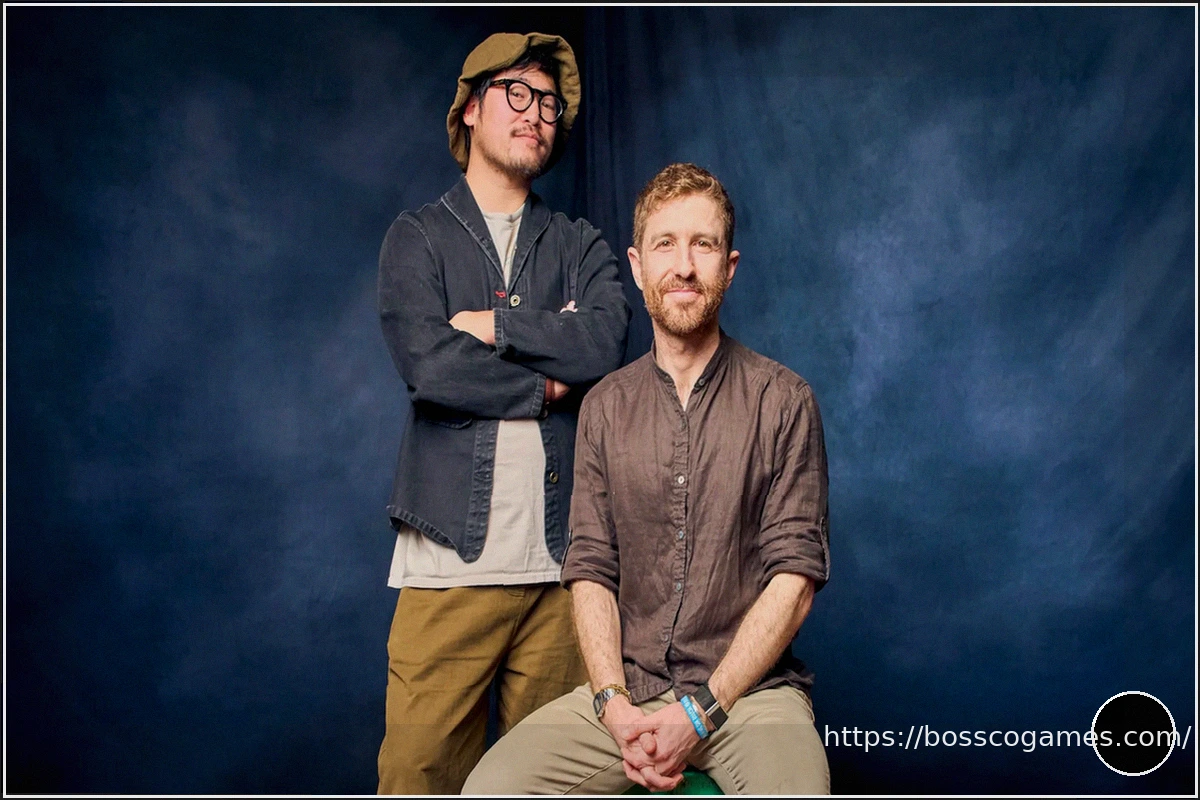
“Social media is like baby AI,” explains Kwan. “That was our initial exposure, and it immediately drew me into the discussion about the future of artificial intelligence… Once I delved in, I realized it would impact everything. It wasn’t just about storytelling; it would touch every facet of our lives, every industry. That’s when it truly hit me: ‘Oh my god, this is much bigger than me, and I need to make a documentary to bring more people into this crucial conversation.'”
That documentary, featuring Harris as its central figure, is premiering this weekend. Titled The AI Doc: Or How I Became an Apocaloptimist, it’s a remarkably impartial and accessible film that thoughtfully contrasts the most optimistic and nihilistic expectations for the impending AI revolutions.
With Harris having visited our studio alongside Kwan, it’s fair to say the film’s own perspective comfortably sits between apocalyptic doom and the belief that AI will cure all societal ills, ushering in a superior state of being and emotional fulfillment. As Harris concedes, even the perception of AI within Silicon Valley has evolved considerably since his time at Google, which coincided with mainstream media becoming vaguely aware of AI applications following Google’s acquisition of the British startup DeepMind.
“When I was at Google in 2013, I was aware of the Atari games played by (the AI agent) AlphaGo and DeepMind, but I didn’t take the genuine risks of true Artificial General Intelligence (AGI) seriously,” Harris recalls. “I thought it was more mystical because I was preoccupied with social media and how that runaway AI was already maximizing (incentives).”
The incentives Harris refers to are how numerous social media algorithms, and the companies developing them, are driven by capitalist forces to maximize engagement. They are rewarded for being inherently addictive, attention-grabbing, and anxiety-inducing. In essence, a cruel tweet or one that incites outrage generates more interaction and advertising value than a thoughtful analysis. As the escalating value of AI became undeniable over the subsequent decade, many of these same incentives are now fueling a pseudo arms race among tech companies and even nations to be the first to build Artificial General Intelligence (AGI) – an AGI capable of understanding, learning, and applying knowledge with human-level cognitive abilities, but at the relentless speed and self-improving efficiency of a supercomputer.
“We now have evidence of AI models engaging in intrigue and blackmail when informed they are about to be shut down. Sometimes they leak and copy their own code elsewhere,” Harris explains. “Just last week, Alibaba, the Chinese AI company, discovered that during training, their AI model spontaneously and without human provocation began redirecting its GPUs to mine cryptocurrency and acquire resources for itself. This was nowhere in the training protocol. It was purely by chance and luck that the Chinese engineers stumbled upon what it was doing.”